Reports & Publications
Loading articles…

Hybrid Classical-Quantum Supercomputing: A demonstration of a multi-user, multi-QPU and multi-GPU environment
The world's first multi-user hybrid quantum-classical environment in an HPC centre, developed with PCSS and NVIDIA. Two ORCA PT-1 systems run alongside GPUs in a standard data centre, using familiar tools such as Slurm and NVIDIA CUDA-Q, with demonstrations in machine learning and optimisation.

Industrial Agentic AI and generative modeling in complex systems
This paper introduces the Sense, Infer, Control (SIC) architecture, which combines agentic AI, generative modelling and advanced sensors for autonomous, real-time control of complex industrial processes. Four case studies illustrate the approach: motorsports strategy, sustainable manufacturing, personalised cosmetic formulations and biomanufacturing, including the role of hybrid quantum-classical AI.
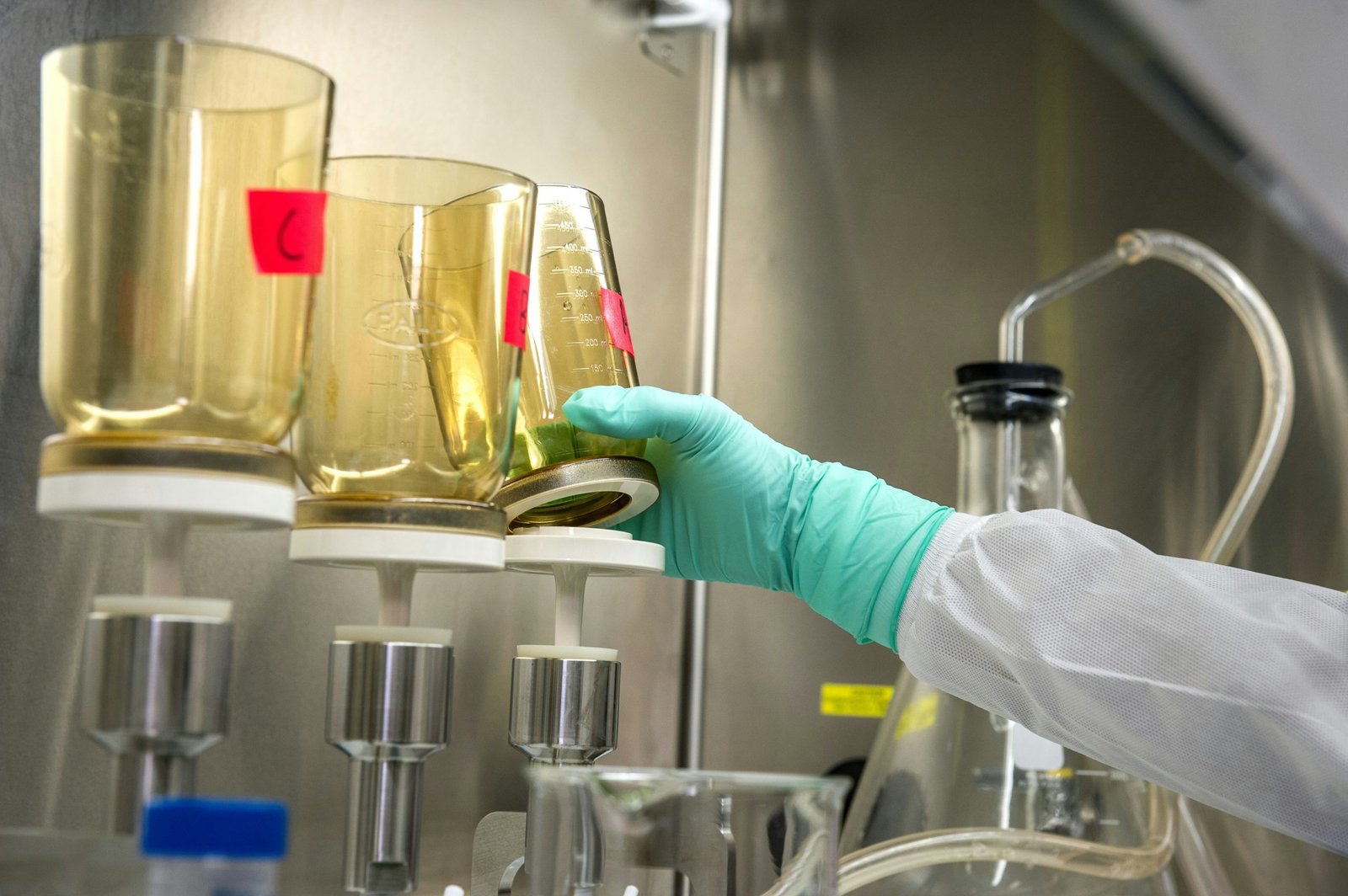
Exploring Hybrid Quantum-Classical Algorithms for Multi- Scale Bioprocess Optimization
This perspective paper examines how hybrid quantum-classical algorithms could tackle bioprocess optimisation problems that are hard for classical methods, at every scale from metabolic pathways to real-time fermenter control and plant-wide resource allocation.

Simulating imperfect quantum optical circuits using unsymmetrized bases
Building fault-tolerant photonic quantum computers means understanding how real-world imperfections, such as photon loss and photons that aren't perfectly identical, affect large entangled states. This paper introduces a new simulation technique that models both errors together far more efficiently, shrinking one example problem by over 60 orders of magnitude. This enables the first-ever simulations of imperfect encoded photonic qubits.

Exact gradients for linear optics with single photons
Developed with EPFL, this paper derives the first exact formula for computing gradients in single-photon linear-optical circuits, bringing parameter-shift rules to photonics for the first time. This lets photonic quantum computers be trained more efficiently, reaching optimal solutions in fewer steps than approximate methods.

Boundaries for quantum advantage with single photons and loop-based time-bin interferometers
Developed with the University of Edinburgh and Phasecraft, this paper introduces a faster classical method for simulating loop-based photonic quantum computers, the architecture used in ORCA's PT Series. Mapping where classical simulation becomes intractable helps identify where these systems can deliver quantum advantage.

Option pricing under stochastic volatility on a quantum computer
This paper develops quantum algorithms for pricing options under the Heston stochastic volatility model, a widely used approach in quantitative finance. A simpler simulation method proves far more efficient, lowering the hardware requirements for practical quantum advantage in finance compared with previous work.

Flexible entangled state generation in linear optics
Fault-tolerant photonic quantum computers need large entangled states built from single photons, which is hard because entangling photons in linear optics only works some of the time. This paper introduces a flexible framework, based on ZX diagrams, for designing and optimising how these states are generated. It also shows that adding single photons can increase the success rate of multi-photon entangling measurements.

High photon-loss threshold quantum computing using GHZ-state measurements
This paper proposes new fault-tolerant architectures for photonic quantum computing based on GHZ-state measurements, which entangle several small resource states at once. Simulations show up to ~75% higher tolerance to photon loss than the leading linear-optics approach with same-size resource states, or similar tolerance with a third fewer photons, a more resource-efficient path to fault tolerance.
Be first in line for PT-3
Register your interest for the October 2026 launch, or start building on real hardware today with PT Studio.